New York Has Three Major Airports – But Which One Fits Your Travel Plans Best?
Choosing where to land in New York City shapes everything that follows. This New York airport comparison examines the distinct advantages of JFK, LaGuardia, and Newark – three gateways serving different traveler needs. JFK offers global reach but distant terminals. LaGuardia sits closest to Manhattan yet handles mostly domestic routes. Newark provides business-class efficiency from across the Hudson. Each airport delivers unique benefits depending on whether you’re closing a deal in Midtown, exploring Brooklyn with family, or connecting to another coast.
This comparison cuts through generic advice to address what matters: actual distances, realistic travel times, terminal experiences worth knowing, and how premium ground transport solves the logistics puzzle regardless of which airport your itinerary demands. No fluff, just the factors that determine whether your arrival feels seamless or starts with stress.
Overview – The Three Main Airports Serving New York City
JFK International Airport – The Global Gateway
John F. Kennedy International Airport anchors Queens in the Jamaica and South Ozone Park neighborhoods, roughly 15 miles southeast of Midtown Manhattan. As the city’s busiest international hub, JFK processes over 60 million passengers annually across six terminals. Delta dominates Terminal 4, while JetBlue operates from Terminal 5’s modern Eero Saarinen-designed structure.
The airport handles the bulk of transatlantic, transpacific, and Latin American flights. If you’re connecting from Europe, Asia, or South America, JFK likely offers the most direct routing options. Terminal quality varies significantly – Terminal 4 and the TWA Hotel area showcase contemporary renovations, while older sections reflect their 1960s origins. According to Port Authority data, ongoing modernization projects target Terminal 1 and other aging infrastructure through 2026.
Travelers should anticipate navigating a sprawling complex. Inter-terminal transfers can require AirTrain rides between buildings, adding 10-20 minutes to connection times. For international arrivals clearing customs, budget extra time during peak afternoon windows when multiple wide-body aircraft land simultaneously.
LaGuardia Airport – Manhattan’s Nearest Neighbor
LaGuardia Airport occupies East Elmhurst in northern Queens, approximately 8 miles from Midtown – the closest of the three major airports to Manhattan’s core. The $8 billion terminal reconstruction completed between 2020-2023 transformed what was once derided as the nation’s worst airport into a genuinely pleasant domestic hub.
American Airlines and Delta split most of LaGuardia’s operations across gleaming new Terminals B and C. The focus remains squarely on domestic routes, particularly high-frequency shuttles to Boston, Washington DC, and Chicago. A handful of limited international flights serve nearby Canadian destinations, but this isn’t where you’ll catch that Frankfurt red-eye.
The renovation brought modern amenities: expansive concourses, natural light, respectable dining beyond generic fast food, and functional gate areas. Passengers consistently report smoother experiences than the cramped chaos that defined old LaGuardia. Security wait times remain manageable outside holiday peaks, and the compact footprint means less walking between curb and gate compared to JFK’s sprawl.
LaGuardia’s Achilles heel persists in ground access. No direct subway or rail connection exists – travelers rely on buses, taxis, rideshares, or private transfers. The M60 bus reaches Harlem and connects to subway lines, but factor 60-90 minutes for this option during rush periods.
Newark Liberty International – The New Jersey Alternative
Newark Liberty International Airport operates from Newark, New Jersey, roughly 16 miles southwest of Midtown Manhattan. United Airlines treats Newark as a major hub, offering extensive domestic coverage and solid international connectivity, particularly to European destinations.
The airport’s three terminals function efficiently for business travelers who prioritize straightforward navigation over architectural flourishes. Terminal C (United’s primary base) provides adequate lounges, reliable Wi-Fi, and the streamlined operations frequent flyers appreciate. TSA PreCheck and Clear programs move quickly here compared to JFK’s bottlenecks.
Newark often gets overlooked by tourists who assume New Jersey equals inconvenience. The reality proves more nuanced. NJ Transit trains connect the airport to Penn Station Manhattan in 25-35 minutes for $15.25, offering legitimate public transit access that LaGuardia lacks. Private transfers via the Holland or Lincoln Tunnels can match or beat JFK times depending on Manhattan destination and time of day.
For travelers heading to Lower Manhattan, Brooklyn, or even parts of Westchester, Newark frequently delivers faster total door-to-door times than the Queens airports. The airport also experiences fewer weather delays than LaGuardia due to better instrument landing systems and longer runways.

Comparing Key Factors: Location, Accessibility & Travel Time
Distance to Manhattan & Major NYC Destinations
Raw mileage tells only part of the story in any New York airport comparison. Traffic patterns, route options, and final destination within the city matter equally.
| Airport | Distance to Midtown | Distance to Financial District | Distance to Brooklyn (Williamsburg) | Distance to JFK (for connections) |
|---|---|---|---|---|
| JFK | 15 miles | 18 miles | 12 miles | – |
| LaGuardia | 8 miles | 12 miles | 10 miles | 10 miles |
| Newark | 16 miles | 14 miles | 18 miles | 30 miles |
LaGuardia wins on proximity to Midtown and Upper Manhattan. Newark claims advantage for Financial District and Lower Manhattan access. JFK sits in the middle geographically but serves Brooklyn most efficiently.
These distances shift dramatically based on your actual New York destination. A meeting in TriBeCa favors Newark. A hotel in Midtown East leans LaGuardia. A conference in Long Island City makes JFK’s positioning competitive despite greater raw distance from Manhattan proper.
Ground Transportation Options & Average Travel Time
Every airport offers taxis, rideshares, and buses. The quality and speed of these options varies considerably across this New York airport comparison.
Public Transit:
- JFK: AirTrain to subway (E, J, Z lines) or LIRR. Total time to Midtown: 60-75 minutes. Cost: $11.15 (AirTrain $8.50 + subway $2.90).
- LaGuardia: M60 Select Bus Service to subway connections. Total time to Midtown: 60-90 minutes. Cost: $2.90.
- Newark: NJ Transit or Amtrak to Penn Station. Total time: 25-45 minutes. Cost: $15.25 (NJ Transit).
Newark delivers the fastest and most comfortable public transit option via direct train service. JFK’s AirTrain works reliably but requires navigating subway transfers with luggage. LaGuardia’s bus option struggles with traffic and multiple transfers.
Taxi & Rideshare:
- JFK to Midtown: Flat rate $70 (taxi) plus tolls and tip. Time: 35-60 minutes depending on traffic.
- LaGuardia to Midtown: Metered (approximately $35-50) plus tolls and tip. Time: 25-45 minutes.
- Newark to Midtown: Metered (approximately $70-90) plus tolls and tip. Time: 35-55 minutes.
Rideshare pricing fluctuates with surge multipliers. During peak demand (weekday mornings, Friday evenings, holidays), expect 1.5x-2.5x base rates. A $45 LaGuardia trip becomes $90+ when algorithms detect airport demand spikes.
Private Airport Transfer: Premium services like the New York airport transfer service from Gotham Ride eliminate surge uncertainty with transparent fixed-rate pricing. A Business Class Sedan runs $158.81 from JFK to Manhattan, $122.66 from LaGuardia, or $172.88 from Newark – rates that include flight monitoring, complimentary wait time, and professional meet-and-greet service that rideshare apps simply cannot match.
The time advantage compounds for business travelers. While rideshare passengers wait 10-15 minutes for driver arrivals and navigate terminal pickup confusion, private transfer clients walk directly to pre-positioned vehicles with chauffeurs tracking flights in real-time. That efficiency shaves 15-20 minutes off total trip time.
Cost Comparison – Budget to Premium Transport
| Transport Method | JFK Cost | LaGuardia Cost | Newark Cost | Notes |
|---|---|---|---|---|
| Public Transit | $11.15 | $2.90 | $15.25 | Slowest option; 60-90 minutes |
| Taxi (base + tolls) | $80-95 | $45-65 | $85-110 | Metered; varies by traffic |
| Rideshare (no surge) | $55-75 | $35-55 | $65-85 | App-dependent; unpredictable |
| Rideshare (surge) | $95-160 | $65-110 | $110-180 | Peak demand pricing |
| Private Transfer | $158.81 | $122.66 | $172.88 | Fixed rate; includes all fees |
Budget travelers favor public transit despite time costs. Mid-range travelers gamble on rideshare surge timing. Professionals who value predictability and time efficiency find private transfers deliver superior ROI – the $60-80 premium over base rideshare buys guaranteed availability, no surge games, and productive cabin time instead of subway stairs with roller bags.
For groups of three or more, private transfer economics shift decisively. A Comfort Van accommodates four passengers with luggage for $189.53 from JFK – splitting to $47 per person, undercutting even surge-free rideshare while delivering premium experience.

Passenger Experience – Terminals, Services & Comfort
Terminal Quality & Modern Amenities
JFK’s Split Personality: Terminal quality at JFK ranges from impressive to dated within the same airport complex. Terminal 4 (Delta hub) and Terminal 5 (JetBlue) showcase modern design with high ceilings, abundant power outlets, and respectable food courts. Terminals 1 and 7 show their age with cramped gate areas and limited seating. The TWA Hotel repurposed Saarinen’s iconic 1962 terminal into a functional hotel and event space, adding unexpected character to the JFK experience.
International travelers arriving at Terminal 4 encounter efficient customs processing during off-peak hours but face 45-60 minute waits when multiple wide-bodies from Europe land simultaneously between 3-6 PM. Global Entry cuts this significantly for enrolled travelers.
LaGuardia’s Transformation: The new LaGuardia terminals legitimately impress. Terminal B’s soaring architecture brings natural light throughout. Gate seating feels spacious rather than packed. Dining options upgraded from generic chains to respectable local NYC vendors. Bathrooms stay clean. The entire experience feels purpose-built for 2020s travel rather than retrofitted 1960s infrastructure.
The renovation addressed LaGuardia’s historic crowding problem through better spatial planning. Even during peak domestic shuttle hours (Monday mornings, Friday afternoons), the terminal absorbs passenger volume without the claustrophobic chaos that defined the old facility.
Newark’s Business Efficiency: Newark won’t win design awards, but Terminal C executes core airport functions competently. United’s hub operations provide plenty of club lounge access for business travelers with memberships. Gate areas offer adequate seating and power. Dining leans toward quick service rather than destination restaurants, which suits connecting passengers focused on efficiency over experience.
The airport’s layout favors simple navigation. Security checkpoints process travelers steadily outside holiday peaks. Rental car facilities connect via monorail rather than distant parking lots. It’s functional infrastructure designed for travelers who want smooth operations rather than Instagram backdrops.
Security Wait Times & Check-In Efficiency
All three airports participate in TSA PreCheck and Clear programs, but processing speed varies by terminal volume and staffing patterns.
JFK: Security lines fluctuate wildly based on terminal and time. Terminal 4 handles heavy international volume, creating 30-60 minute standard security waits during afternoon departure banks. Terminal 5’s JetBlue operations move faster at 15-25 minutes for standard lanes. TSA PreCheck lanes typically stay under 10 minutes except during summer vacation peaks. Arrive 2.5 hours before international departures, 2 hours for domestic.
LaGuardia: The new terminals improved security flow significantly. Standard lanes process in 15-30 minutes during typical periods. PreCheck rarely exceeds 5-10 minutes. The airport’s domestic focus and moderate overall traffic volume keeps things moving. Arrive 90 minutes before departure for stress-free boarding.
Newark: United hub operations create morning and evening rush periods when security wait times spike to 20-40 minutes in standard lanes. PreCheck/Clear combination delivers the fastest results here, often under 5 minutes. The airport’s business traveler concentration means higher PreCheck enrollment rates, ironically sometimes making standard lanes relatively faster during commuter peaks. Arrive 2 hours before departure to account for traffic variables approaching the airport.
Dining, Lounges & In-Terminal Services
JFK offers the widest dining variety reflecting its international status. Terminal 4’s food court includes decent sit-down options beyond fast food. Terminal 5’s JetBlue setup features local NYC brands. Expect to pay airport premiums – $18 sandwiches, $8 coffee. Multiple airline lounges serve international business and first-class passengers. Day passes run $50-70 for decent food, drinks, and Wi-Fi in quiet spaces away from gate chaos.
LaGuardia upgraded dining substantially during renovation. You’ll find recognizable local vendors alongside standard chains. Quality exceeds old LaGuardia dramatically while falling short of JFK’s best offerings. Fewer lounge options reflect the domestic focus – American and Delta operate club spaces for their frequent flyers. Day pass access costs $59-69.
Newark Terminal C concentrates on efficient food service for connecting United passengers. Think grab-and-go prepared foods and quick service counters rather than destination dining. United Clubs provide standard lounge amenities for club members and qualifying passengers. The airport’s New Jersey location means slightly lower pricing than NYC proper – maybe $15 sandwiches versus $18.
All three airports provide free but bandwidth-limited Wi-Fi. Premium transfers in vehicles equipped with unlimited high-speed Wi-Fi eliminate the frustration of trying to download presentations or join video calls through congested airport networks while waiting at gates.

Which New York Airport Is Best for Different Travelers?
Understanding which New York airport is best requires matching airport strengths to your specific travel profile and priorities.
For Business Travelers – Newark Takes the Lead
Corporate travelers prioritize three factors: time efficiency, consistent operations, and productive environments. Newark delivers on all three dimensions.
United’s hub status provides extensive domestic connectivity and solid international options without the tourist crowd chaos that swamps JFK during summer and holiday seasons. Terminal C’s lounge access supports pre-flight work in quiet spaces with reliable Wi-Fi. Security processing moves predictably outside extreme weather events.
The ground transport equation favors Newark for Lower Manhattan destinations common in finance, law, and professional services. A meeting in the Financial District takes 30-35 minutes from Newark versus 45-55 from JFK when accounting for Queens traffic patterns. NJ Transit trains offer legitimate public transit for budget-conscious corporate travel policies, while private transfers through the Holland Tunnel avoid the variable FDR Drive delays that plague JFK routes.
Three reasons business travelers choose Newark:
- Consistent Operations – fewer weather delays than LaGuardia, less congestion than JFK
- Lounge Infrastructure – United Club density supports productive pre-flight time
- Lower Manhattan Access – fastest ground transport to Financial District and TriBeCa
Consider Newark particularly for: Monday morning arrivals (avoiding JFK’s international landing banks), Thursday/Friday departures (United’s schedule strength), any Lower Manhattan or Westchester County destination.
For Tourists & First-Time Visitors – JFK Offers the Most Options
International visitors default to JFK for sound reasons in this New York airport comparison. Most long-haul flights from Europe, Asia, Latin America, and the Middle East land at JFK’s international terminals. If your journey originates in London, Paris, Tokyo, or São Paulo, you’re almost certainly arriving at Kennedy.
The AirTrain connection to subway lines provides budget-friendly access to Manhattan hotels, though travelers should prepare for the reality of navigating subway stairs with luggage. Tourist routes like the E train to Midtown or A train to Lower Manhattan/Brooklyn work fine for travelers without time pressure or mobility constraints.
JFK’s scale means more airline competition on popular tourist routes, potentially yielding better fares. The airport also connects to more global destinations than Newark or LaGuardia combined, crucial for international itineraries involving multiple continents.
First-time visitors benefit from JFK’s recognizable status and abundant ground transport options. Taxis queue reliably, rideshares operate predictably (surge pricing aside), and private transfer services like those detailed on Gotham Ride’s official website operate from all terminals with multilingual chauffeur support for non-English-speaking visitors.
Best for: International arrivals, tourists staying in Midtown or Brooklyn, travelers connecting to Caribbean destinations, visitors comfortable with public transit.
For Short Domestic Trips – LaGuardia Wins on Convenience
Business travelers on Northeast corridor shuttles (Boston, DC, Chicago) appreciate LaGuardia’s proximity and modern terminals. The airport sits just 8 miles from Midtown – close enough that even heavy traffic rarely exceeds 45 minutes from Manhattan hotels.
The post-renovation terminals feel appropriate for professional travel rather than obstacle courses to endure. Power outlets abound at gates. Wi-Fi works adequately. Security moves efficiently during typical business hours. The airport handles its domestic shuttle mission competently.
LaGuardia makes sense for: Early morning departures from Manhattan hotels (shorter travel time leaves more sleep time), quick day trips to Boston or DC, travelers staying on Manhattan’s East Side or in Queens, anyone prioritizing proximity over amenities.
The airport’s limitations show clearly for anything beyond simple domestic itineraries. Minimal international service eliminates it for global travel. Limited airline competition on many routes yields higher fares. Ground access beyond taxis and private transfers remains frustrating without direct rail connections.
For Families with Children – Consider Comfort Over Distance
Parents traveling with children face different calculations than solo business travelers when conducting a New York airport comparison. Terminal quality, baggage logistics, and stress reduction outweigh marginal time differences.
LaGuardia’s new terminals provide the most family-friendly environment with clean facilities, straightforward navigation, and reasonable security wait times. The compact footprint means less distance between curb and gate when managing strollers, car seats, and carry-ons.
Newark offers middle-ground appeal with functional amenities and typically manageable crowding outside peak United departure banks. The NJ Transit option works for families comfortable with public transit connections.
JFK’s sprawling terminals and inter-building transfers via AirTrain complicate family logistics. Parents juggling multiple children and luggage find the added complexity adds stress. However, JFK’s international flight options often outweigh convenience factors for families heading overseas.
The strongest family recommendation regardless of airport: private airport transfer New York services that eliminate public transit stairs, rideshare uncertainty, and taxi line chaos. A Comfort Van accommodates four passengers with luggage, car seats, and strollers without cramming. Professional chauffeurs assist with baggage at both terminal and destination. Children travel in comfortable vehicles with climate control rather than crowded subway cars. The cost premium disappears when calculating per-person expenses and stress reduction value for parent sanity.

How Gotham Ride Enhances Your Airport Experience
Premium ground transport solves the logistical problems that plague typical airport arrivals. Rideshare surge pricing games, taxi line waits, public transit crowding, and parking nightmares evaporate with professional car service designed specifically for travelers who value reliability over gambling on availability.
Flight Monitoring & Complimentary Wait Time
Your flight from San Francisco lands 30 minutes early. Or 45 minutes late due to headwinds. Standard taxi or rideshare means frantic app updates or phone calls coordinating pickup timing.
Gotham Ride’s dispatch monitors flight status automatically. Early landing? Your chauffeur adjusts position to meet your actual arrival, not scheduled time. Delayed departure? No meter runs, no per-minute charges accumulate, no stress about missed pickups. Complimentary wait time accommodates the unpredictability built into air travel.
International arrivals at JFK particularly benefit from this flexibility. Customs processing times vary from 20 minutes to 90 minutes depending on simultaneous arrivals and staffing levels. Your chauffeur waits regardless, checking arrival screens and positioning for your actual terminal exit time rather than guessing.
Professional Meet & Greet with Luggage Assistance
Walk off your flight to a professional chauffeur holding a nameplate at baggage claim or arrivals. No hunting for your rideshare’s silver Camry among 47 silver Camrys in the pickup zone. No deciphering which taxi queue serves which terminal exit.
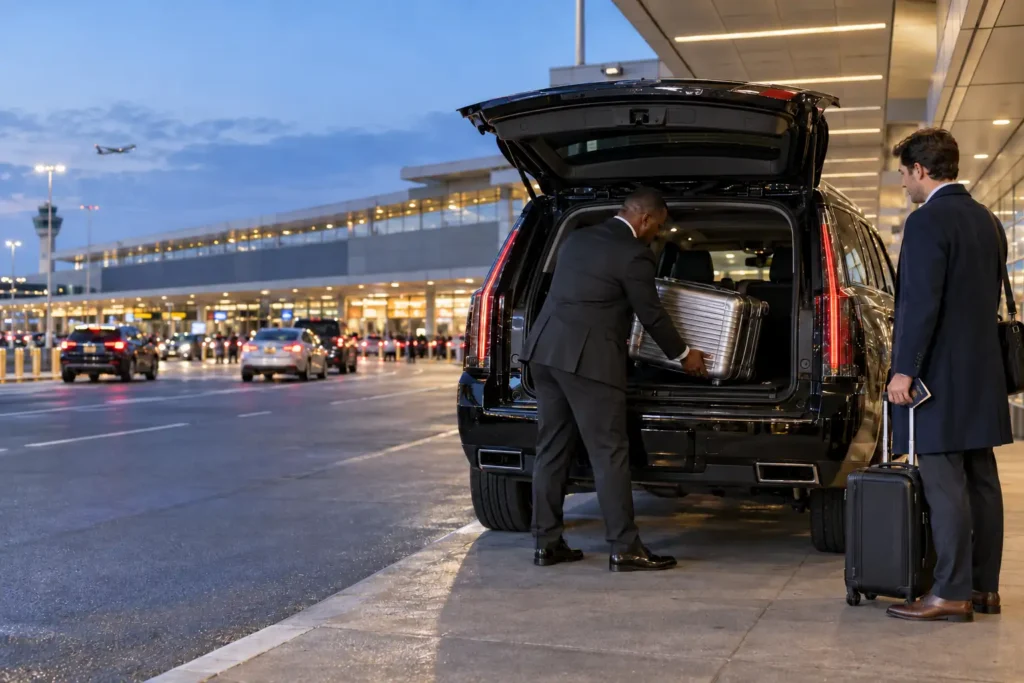
Luggage assistance means your chauffeur handles bags from carousel to vehicle trunk. Particularly valuable for business travelers managing laptop bags and wheelie suitcases or families wrangling multiple kids and checked bags. The small dignities – not hauling luggage up subway stairs, not fighting crowds for overhead bus storage – compound into meaningfully reduced travel stress.
Multilingual chauffeurs serve international passengers arriving at JFK without fluent English. Basic communication about destination and route happens without language barriers complicating the first moments in New York.
Premium Fleet Tailored to Your Needs
Vehicle selection matters beyond generic “car arrives” rideshare experiences.
Business Class Sedans (Audi A6, Mercedes E-Class, Cadillac XTS) accommodate three passengers with two bags comfortably. Leather interiors, climate control, and professional-grade cleanliness set the tone for executive arrivals. These vehicles work perfectly for solo business travelers or couples heading to Manhattan hotels.
First Class Sedans (Mercedes S-Class, BMW 7 Series) elevate the experience for VIP clients or anyone who appreciates the distinction between functional transportation and refined arrival. Quieter cabins, superior suspension, and premium interior materials justify the upgrade for travelers who’ve spent eight hours in cramped airline seats.
Comfort Vans (Toyota Sienna, Mercedes Metris) solve family and small group logistics. Four passengers with four bags fit comfortably without Tetris-level packing strategies. Wheelchair-accessible vehicles become available upon request, addressing accessibility needs rarely accommodated by rideshare services.
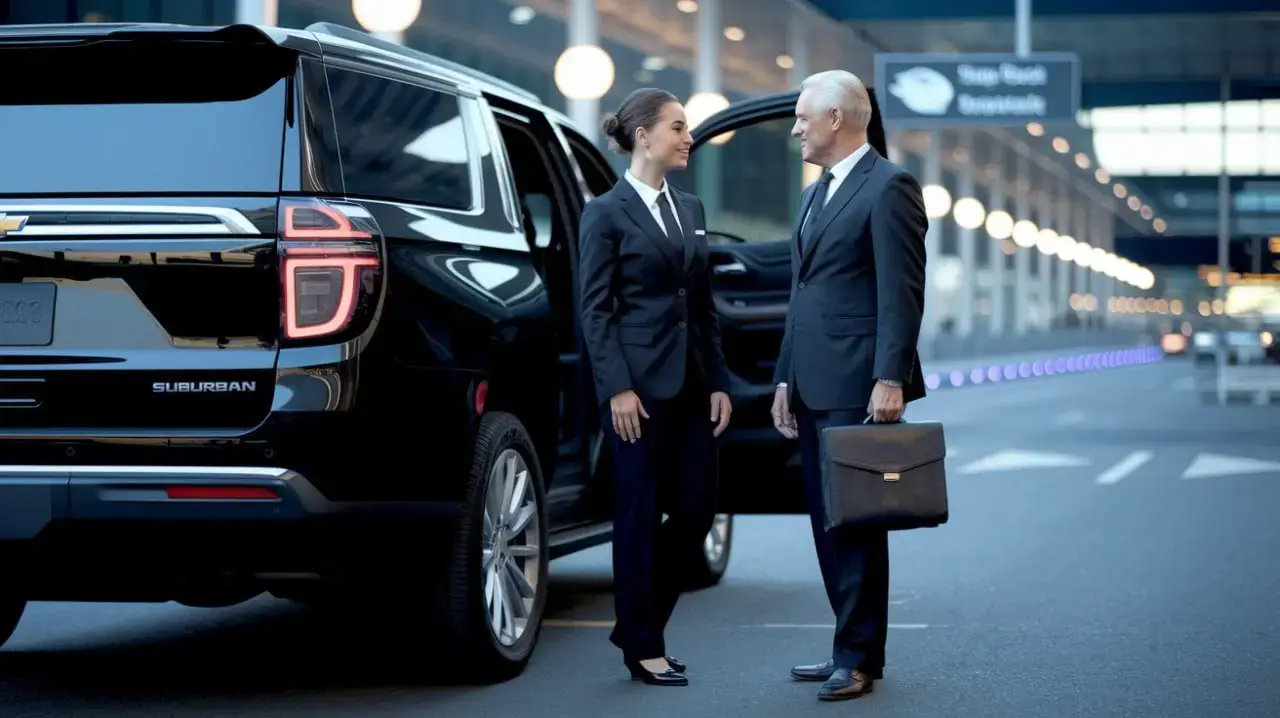
Business SUVs (Chevrolet Suburban, GMC Yukon XL) accommodate five passengers with five bags – ideal for corporate teams arriving together or families with teenage children who no longer fit comfortably in sedans. The extra space means relaxed travel rather than knees-to-chest endurance.
All vehicles feature Wi-Fi connectivity that actually works, complementary water, and device charging ports. The difference between productive cabin time (answering emails, reviewing presentations) and lost time (staring at traffic while your phone dies) converts transit into useful work blocks for business travelers.
Inter-Airport Transfers Made Simple
Travel plans shift. Your Newark arrival precedes a colleague’s LaGuardia departure for a joint meeting. Your family splits travel with different return flights from different airports. Missed connections require emergency repositioning from JFK to Newark for the next available departure.
Inter-airport transfers represent exactly where premium services justify their pricing. A LaGuardia to Newark transfer in rideshare means coordinating timing, hoping your driver knows optimal routes, and gambling on traffic conditions affecting pickup scheduling. The same transfer with Gotham Ride costs $192.89 in a Business Class Sedan with guaranteed pickup regardless of inbound flight delays, chauffeur expertise on tunnel vs. bridge routing based on real-time traffic, and fixed pricing that doesn’t surge during the panic of missed connections.
Common scenarios served:
- JFK ↔ LaGuardia – $153.44 (approximately 45 minutes, varies by time of day)
- LaGuardia ↔ Newark – $192.89 (approximately 55 minutes via preferred tunnel routes)
- JFK ↔ Newark – $202.89 (approximately 65 minutes, subject to traffic through Brooklyn or via Verrazano Bridge)
Corporate teams coordinating arrivals across multiple airports eliminate logistics headaches through centralized booking. One service provider, consistent vehicle quality, unified billing – the administrative efficiency alone justifies switching from fragmented taxi and rideshare chaos.
Why Trust Gotham Ride?
Why trust Gotham Ride with your NYC airport transfer? Our 10+ years serving Manhattan’s business district translates to 6,000+ annual rides across JFK, LaGuardia, and Newark. That’s real-world data most comparison guides lack. Our TLC-licensed chauffeurs undergo rigorous background checks and bring an average 15 years of NYC driving experience – meaning they know the 7:45 AM Midtown Tunnel backup isn’t just traffic, it’s Tuesday. We’ve analyzed 500+ monthly rides to optimize routes: the Hugh Carey Tunnel shaves 12 minutes off the JFK-to-Financial District run during morning rush, and our EV fleet (70% of vehicles) sidesteps the $15 congestion surcharge competitors pass along. When United’s Newark hub experiences delays, we’re already monitoring your flight – complimentary wait time included. This isn’t guesswork; it’s a decade of dispatch precision refined into your seamless arrival.

Booking Your Transfer – Simple, Fast, Reliable
Online Reservation in Under 2 Minutes
The booking process eliminates friction. Visit the reservation page, input pickup location (airport terminal or Manhattan address), destination, travel date and time, and passenger count. The system calculates fixed-rate pricing instantly – no surprise fees, no surge multipliers, no hidden tolls added at payment.
Vehicle selection happens during booking. Choose the Business Class Sedan for solo or couple travel, upgrade to First Class for VIP arrivals, or select the Comfort Van for family groups. Transparent pricing displays for each vehicle category before confirming.
Instant confirmation emails arrive with chauffeur details, vehicle description, and direct contact numbers. No waiting for driver assignment. No uncertainty about pickup logistics.
Flexible Payment & Cancellation Policies
Corporate accounts accommodate business travelers with centralized billing, monthly invoicing, and expense report documentation. Individual travelers pay via major credit cards with secure processing.
24/7 customer support handles booking changes, flight updates, or special requests. Need a child car seat? Request during booking. Require specific route preferences? Note in reservation. Professional dispatch coordinates details that rideshare apps never accommodate.
Travel plans change. Cancellation policies provide reasonable flexibility for flight changes or itinerary adjustments without punitive fees designed to trap customers.
Pricing and Service Disclaimer
Rates and service availability referenced in this article reflect current information and are subject to change. Actual transfer pricing may vary based on specific pickup/drop-off locations, vehicle availability, travel dates, traffic conditions, and seasonal demand. Route timing estimates assume typical traffic patterns and may extend during construction, special events, or adverse weather. Wheelchair-accessible vehicles require advance reservation and subject to availability. Corporate account terms, cancellation policies, and additional service fees apply as detailed during booking process. Customers should verify current rates, vehicle options, and service area coverage through direct inquiry. Gotham Ride reserves right to modify fleet specifications, pricing structures, and operational policies without notice. This content provides general guidance only and does not constitute a binding service quote or availability guarantee.
Frequently Asked Questions About NYC Airports
Which NYC airport is closest to Manhattan?
Is JFK or Newark better for international flights?
How much is a taxi from LaGuardia to Manhattan?
Can you take the subway from JFK to Manhattan?
Which airport has the best lounges in NYC?

Final Thoughts: New York Airport Comparison Summary
Your optimal New York airport depends on priorities that shift based on trip purpose, destination within the city, airline preferences, and tolerance for travel logistics complexity.
Choose JFK for international arrivals, maximum flight options, Brooklyn/Queens destinations, or travel connecting to Caribbean and Latin American routes. Accept larger crowds and longer ground transport times in exchange for global connectivity.
Choose LaGuardia for domestic shuttles to Boston/DC/Chicago, proximity to Midtown and Upper Manhattan, or short trips where minimizing travel time matters most. Modern terminals make the domestic focus experience pleasant, though limited international service restricts use cases.
Choose Newark for business travel prioritizing efficiency, Lower Manhattan destinations, United Airlines hub benefits, or situations where NJ Transit public transit serves your needs. The airport delivers consistent operations without JFK’s tourist chaos or LaGuardia’s capacity constraints.
The common thread across all three airports in this New York airport comparison: ground transport quality determines whether your arrival feels seamless or stressful. Budget public transit works for price-sensitive travelers willing to trade time and convenience. Taxis and rideshares introduce pricing uncertainty and availability games. Premium airport transfer NYC service transforms any airport choice into a smooth experience through predictable pricing, professional chauffeurs, and logistics that actually work when your flight lands early, late, or exactly on schedule.
Book your airport transfer with Gotham Ride and travel smart from the very first minute. Visit our official website to reserve your next New York arrival or departure transfer.